
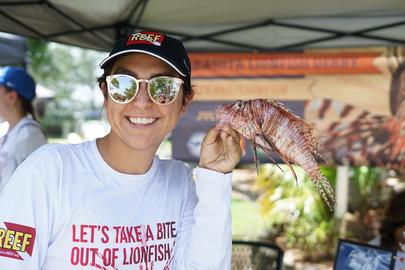
Learn all about the invasive lionfish during this free, online workshop. Topics include background of the invasion, lionfish biology, ecological impacts, current research, and safe collecting and handling techniques.
Current search
Search found 451 items
- INVASIVE
Predation by the invasive Indo-Pacific lionfish impacts native fish populations within the Caribbean region and threatens to expand further into Brazil and the Mediterranean. Identifying the range-restricted native fish species with high predation vulnerability in these areas ahead of the invasion front combined with the knowledge of the time a lionfish population typically takes to reach dangerously high densities could help conservation planners attain positive outcomes and reduce biodiversity loss.
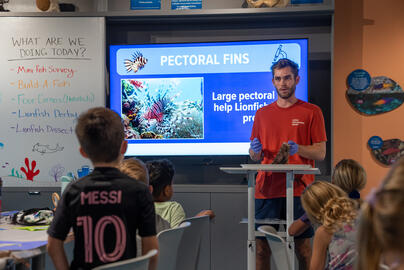
Starting in February, REEF is excited to welcome eight classes from Key Largo schools to our Ocean Exploration Center for hands-on educational field trips. These visits are made possible through the UWCK Marine Science Education Grant, funded by the United Way of Collier and the Keys and the Embassy of the United Arab Emirates, with additional support from REEF. By covering transportation costs, the grant removes a major barrier for local schools and makes it possible for hundreds of students to visit REEF's Ocean Exploration Center and engage directly with marine science.
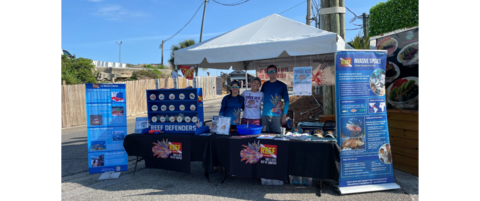
Join us for a fun afternoon and evening of drinks, food, friends, and lionfish during Sharkey's annual Rockin' the Dock celebration! Stop by the REEF booth to learn about invasive lionfish and play fun games.
All proceeds that night will support REEF's mission to protect and conserve our ocean through education, research, and citizen science. Come out, have fun, and help make a difference for our reefs!
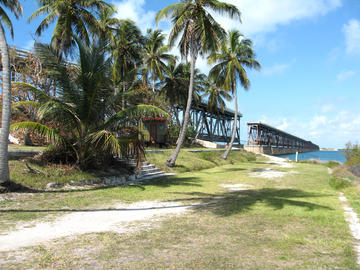
On April 12, REEF attended a Middle Keys Earth Day celebration at Bahia Honda State Park. It was a lovely day, albeit unseasonably hot! Several organizations had booths in attendance as well, including the Florida Keys National Marine Sanctuary (FKNMS), Dolphin Research Center, Reef Relief, the Turtle Hospital, and many others.
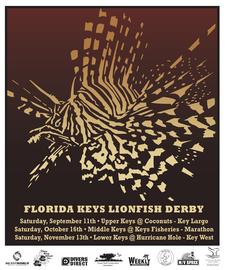
Reef Environmental Education Foundation (REEF) with help from the Florida Keys National Marine Sanctuary (FKNMS) will host an inaugural series of lionfish derbies in the Keys starting this weekend. Divers who remove lionfish from Sanctuary waters will be eligible for more than $10,000 in cash and prizes. Awards will go to the top 3 teams in the following categories: most lionfish, biggest lionfish, and smallest lionfish.
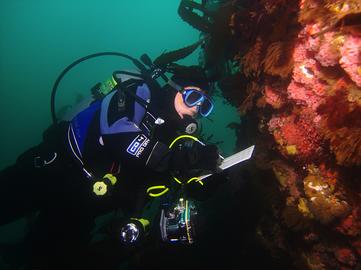
Every month, scientists, government agencies, and other groups request raw data from REEF’s Fish Survey Project database. Here is a sampling of who has asked for REEF data recently and what they are using it for:
-Researchers used data on yelloweye rockfish frequency of occurrence in the San Juan Islands in Washington to evaluate population status for the San Juan County Community Development and Planning Department.

Want to get the latest news and updates from REEF? Then be sure to check our the REEF Facebook Page. You don't have to be on Facebook to view the page, but if you do have a Facebook profile, be sure to "like" us so that all of the latest information about REEF's programs and events, our marine conservation work, and exclusive content and stories will go straight to your feed.
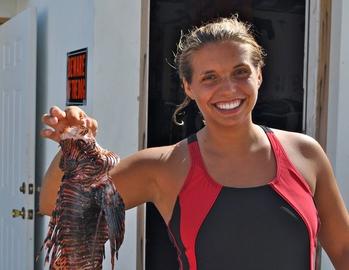
We are excited to welcome the newest member of the REEF Team - Elizabeth Underwood, who joined our staff this month as Lionfish Program Coordinator. Elizabeth has been an active REEF member, avid fish counter, dedicated lionfish hunter, and all-round marine science enthusiast for quite some time. Elizabeth was first introduced to REEF in the Spring 2011 when she studied abroad in the Turks and Caicos Islands and conducted her first of many REEF fish surveys and lionfish studies.