

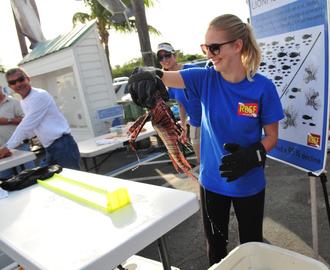
Summer is just around the corner and that means the annual REEF Lionfish Derby Series is almost here! Whether you just want to watch the festivities and taste some delicious lionfish bites, or you want to join the derby and compete with other lionfish hunters for over $3,500 in cash prizes, we have something fun for you. This year, REEF will be hosting four lionfish derbies throughout Florida: Sarasota, Fort Lauderdale, Key Largo, and Juno Beach. REEF Derbies are hugely popular events that remove hundreds to thousands of invasive lionfish from local reefs over a single weekend.
Current search
Search found 451 items
- INVASIVE
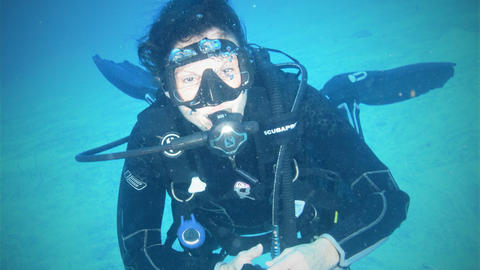
Rosette Davila cares deeply about the health of the oceans. As a supporter of REEF programs both in the water and on land, Rosette wants to make a difference. That's why she recently became part of REEF's Legacy Society through a life estate gift. When asked why she chose REEF, Rosette described a long history of diving (since 1993), where she has become increasingly alarmed with the deterioration of our oceans. In 2015 Rosette joined REEF's Lad Akins and Peter Hughes on a REEF Invasive Lionfish Research Trip to The Bahamas.
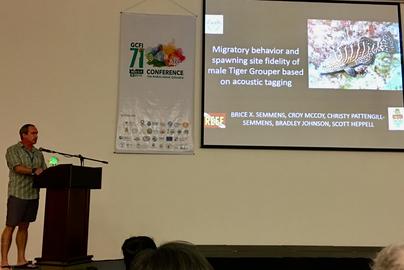
REEF staff, board members, and project collaborators recently joined over 300 scientists, resource managers, and fishers at the Gulf and Caribbean Fisheries Institute (GCFI) meeting in San Andres, Colombia. GCFI aims to apply fisheries and marine science to solve problems by bringing multiple users of ocean resources together to make informed and coordinated decisions for sustainable use of these resources. REEF staff regularly attend GCFI to share findings and perspectives from our various programs. This year, REEF's Director of Science, Dr.

Join one of REEF's valued Conservation Partners, CoCo View Resort in Roatan, Honduras for Wednesday Night Fishinars! This week, "2017 Lionfish Update" will start at 7:30pm in the CoCo View Clubhouse. Join this fun, informal presentation to learn about the threat of exotic and invasive speices on marine ecosytems, and what is being done to help. These viewings are free and open to all CoCo View guests.

On Saturday, March 30, ten teams of 34 divers removed 620 invasive lionfish during REEF’s 7th Annual Winter Lionfish Derby, held at Sharkey’s Pub and Galley Restaurant in Key Largo. Between sunrise and 6 p.m., competitors scoured Florida Keys reefs in an attempt to to bring in the smallest lionfish, largest lionfish, and most number of individual lionfish. Team Forever Young caught the most fish at 149 individual lionfish.
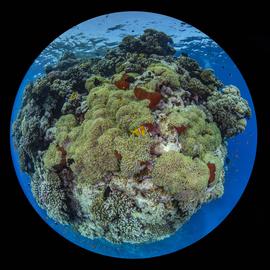
We are happy to share the results of our first underwater photography contest! Thank you to everyone who voted and a special thanks to all of the members who submitted photos! We had more than 120 entries from all over the world, showcasing some incredible marine life. More than 2,500 votes decided the "popular vote" winners in each of the six categories - Fish Portrait, Macro, Invertebrate, Invasive Species, REEF Surveyors, and Environment/Reefscape/Habitat. Congratulations to all of the winners and thank you to everyone for your participation.
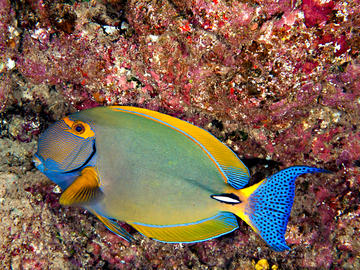
Who doesn't love Surgeonfish?
They're big and easy to see underwater, colorful, and plentiful in the Pacific Ocean. So consider this a pre-Thanksgiving treat from us to you - an entire Fishinar devoted to these oval-shaped beauties, taught by REEF Director of Science, Dr. Christy Semmens. Tune in on Tuesday, Nov. 19 at 8pm Eastern Time.
Through the analysis of acoustic recordings of captive Pterois spp., this study has confirmed anecdotal evidence that Pterois spp. are soniferous. This report of sound production in Pterois spp. provides the foundation for future research into their specific acoustic capabilities including sound production mechanisms, the role of social behaviour and applied techniques for controlling and monitoring invasive Pterois spp. in the tropical and temperate western Atlantic Ocean. REEF staff, Lad Akins, was a co-author.
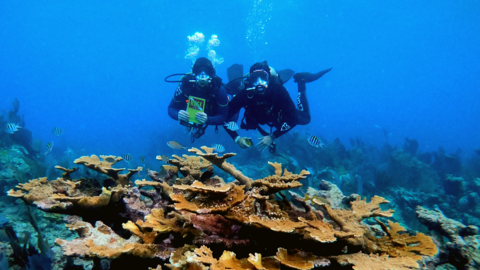
REEF is proud to highlight one of our outstanding Conservation Partners: Amoray Dive Center in Key Largo. REEF Conservation Partners are active organizations and dive shops committed to protecting marine environments worldwide. As valued REEF ambassadors, they serve as centers for marine conservation actions, outreach, and education. You can view the full listing of Conservation Partners or register your organization as a REEF Conservation Partner here.