Want to get the latest news and updates from REEF? Then be sure to check out the REEF Facebook Page. You don't have to have a Facebook account to view the page, anyone can look at the content. If you do have a Facebook profile, be sure to "like" us so that all of the latest information about REEF's programs and events, our marine conservation work, and exclusive content and stories will go straight to your feed. It's also a great place for our members to post pictures, fish stories, and whatever is on their mind.

Acoustic tagging is one of the most powerful marine conservation technologies currently available. REEF uses this technology in both the Grouper Moon Project and the Invasive Lionfish Program to help determine movement, ranges, behavior, and more. But tags and receivers are expensive! We need your help in furthering REEF's valuable marine conservation initiatives by supporting the purchase and implementation of these valuable tools. You can donate securely online at www.REEF.org/contribute. Read on to learn more about these high-tech tools.

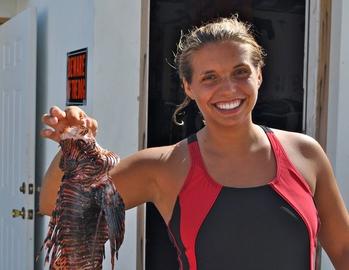
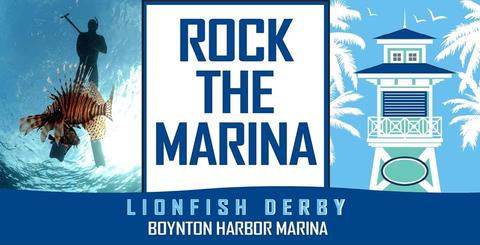
REEF is continuing to lead the charge on combating invasive lionfish! The 2016 Lionfish Derby Series is just around the corner and it’s going to be bigger than ever.

REEF’s 2016 Great Annual Fish Count (GAFC) brought together experienced and beginner fish watchers to count fish (and invertebrate) populations. Beginning fish ID classes were held, and then students were able to use their new skills out in the water during organized GAFC events. Participating groups and shops this year were based in several of REEF's regions, including the TWA, SAS, NE, CAL and PNW regions. The biggest GAFC events this year were held in our NE and California regions.

This summer, we celebrated the 25th anniversary of REEF's cornerstone citizen science program, the Volunteer Fish Survey Project. Our annual summer fundraising campaign kicked off on World Oceans Day on June 8, and since then, thanks to the support of members like you, we were able to reach our goal of raising $60,000 to support our conservation programs!

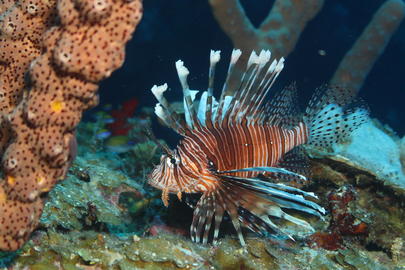
Learn all about the invasive lionfish during this free, online workshop. Topics include background of the invasion, lionfish biology, ecological impacts, current research, and safe collecting and handling techniques.

Predation by the invasive Indo-Pacific lionfish impacts native fish populations within the Caribbean region and threatens to expand further into Brazil and the Mediterranean. Identifying the range-restricted native fish species with high predation vulnerability in these areas ahead of the invasion front combined with the knowledge of the time a lionfish population typically takes to reach dangerously high densities could help conservation planners attain positive outcomes and reduce biodiversity loss.

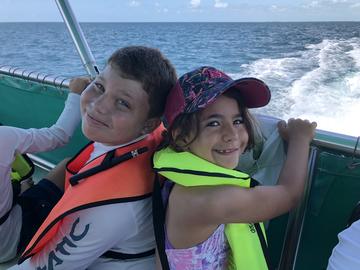
Starting in February, REEF is excited to welcome eight classes from Key Largo schools to our Ocean Exploration Center for hands-on educational field trips. These visits are made possible through the UWCK Marine Science Education Grant, funded by the United Way of Collier and the Keys and the Embassy of the United Arab Emirates, with additional support from REEF. By covering transportation costs, the grant removes a major barrier for local schools and makes it possible for hundreds of students to visit REEF's Ocean Exploration Center and engage directly with marine science.

REEF Director of Science, Dr. Christy Pattengill-Semmens, and Grouper Moon Scientists, Dr. Brice Semmens (NOAA) and Dr. Scott Heppell (Oregon State University), participated in the Gulf and Caribbean Fisheries Institute (GCFI) meeting last month in Guadeloupe. This annual meeting brings together scientists, fishermen, resource agency managers, and marine conservation organizations to present and discuss current topics and emerging findings on coral reef resources of the tropical western Atlantic waters.

Pages